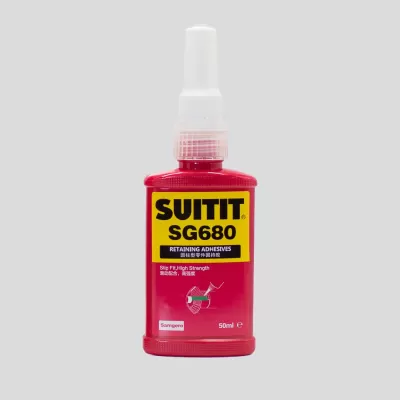
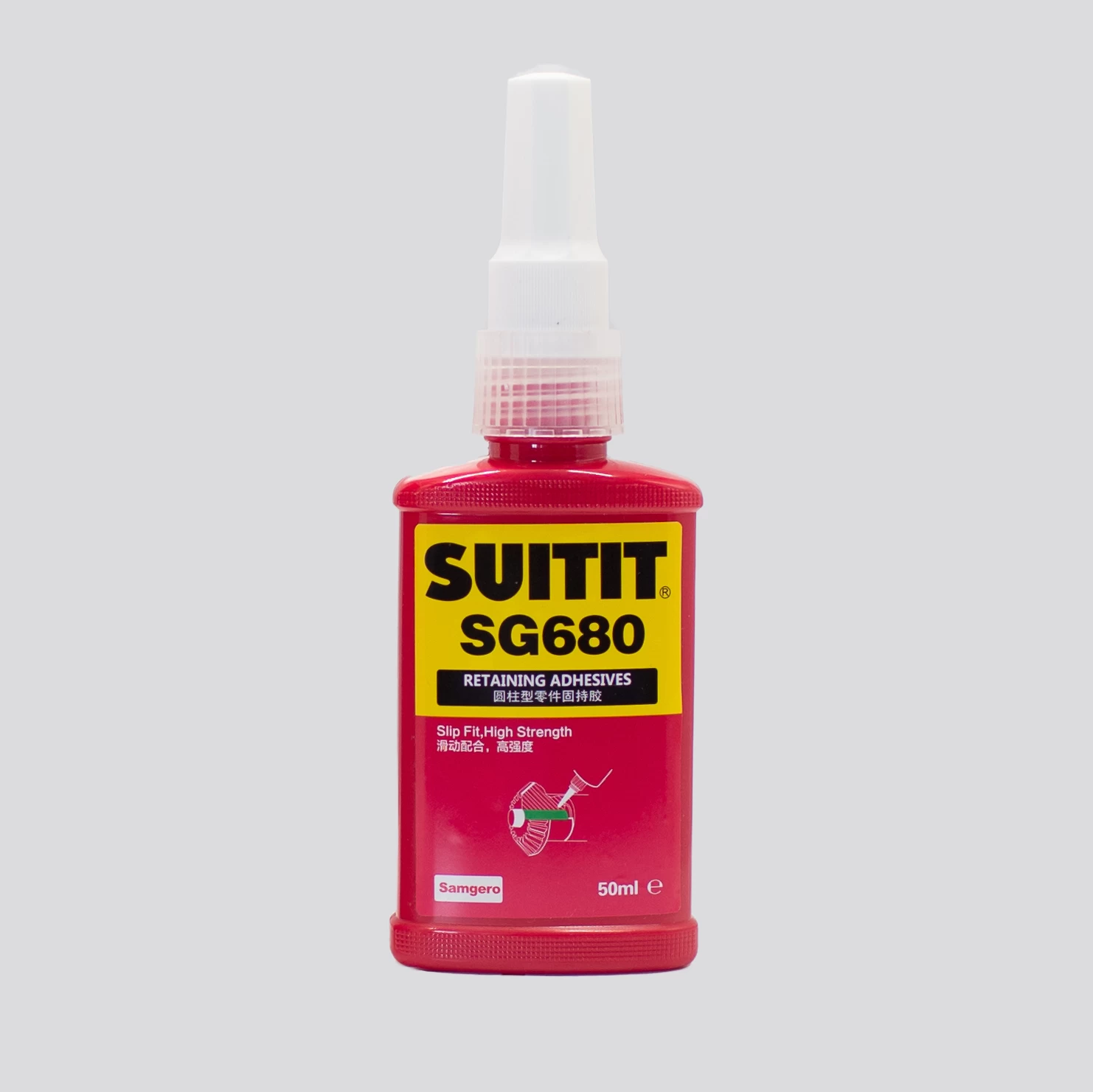
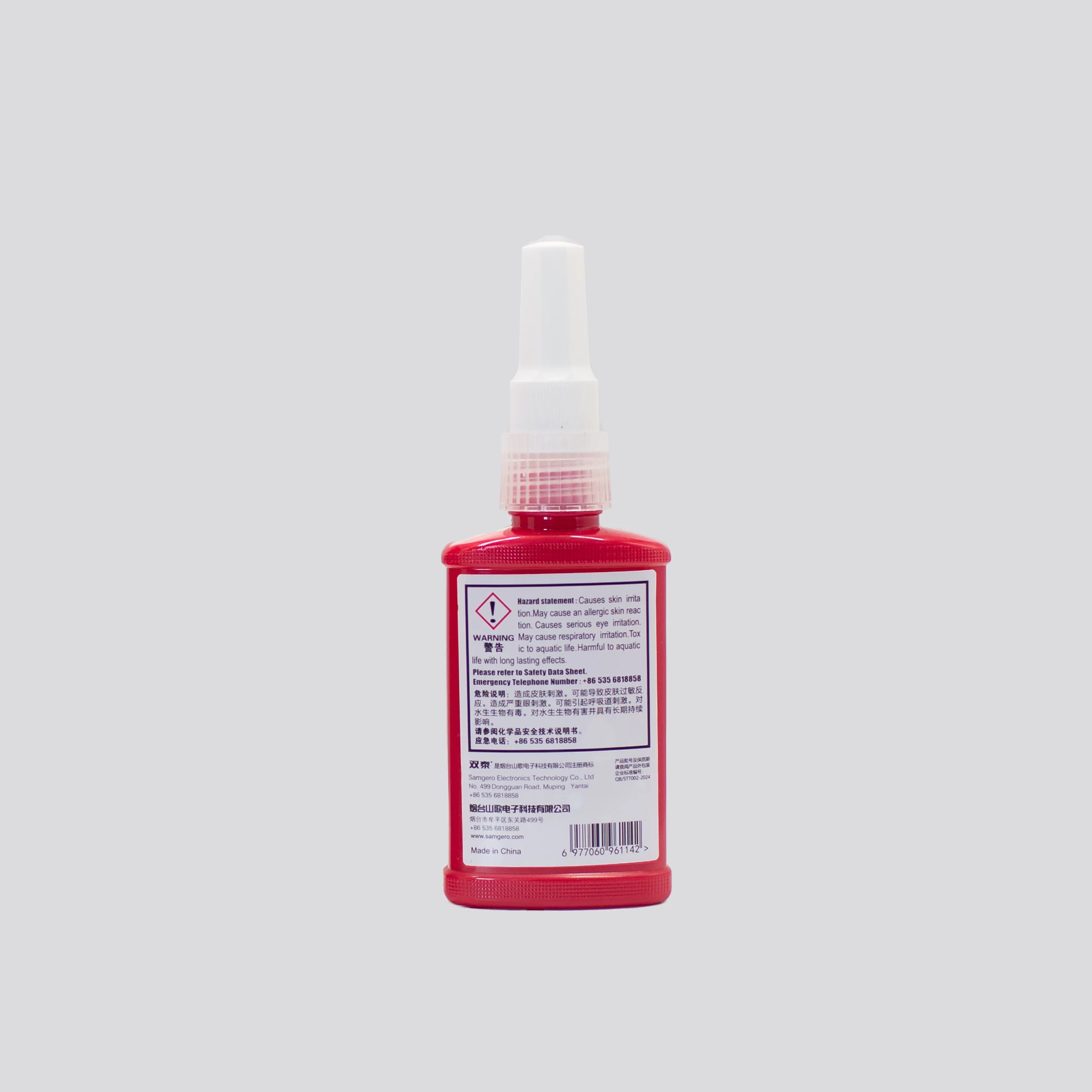
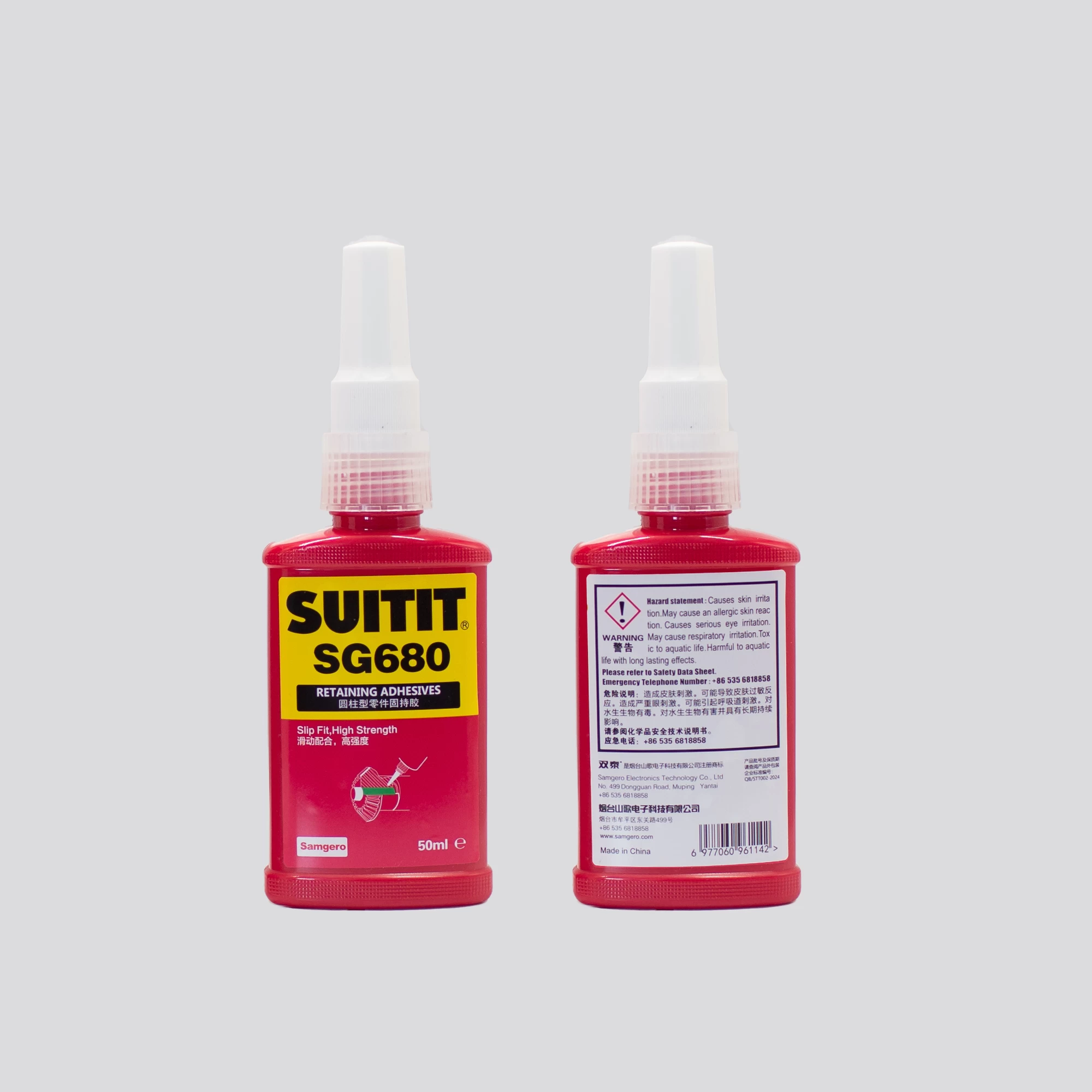
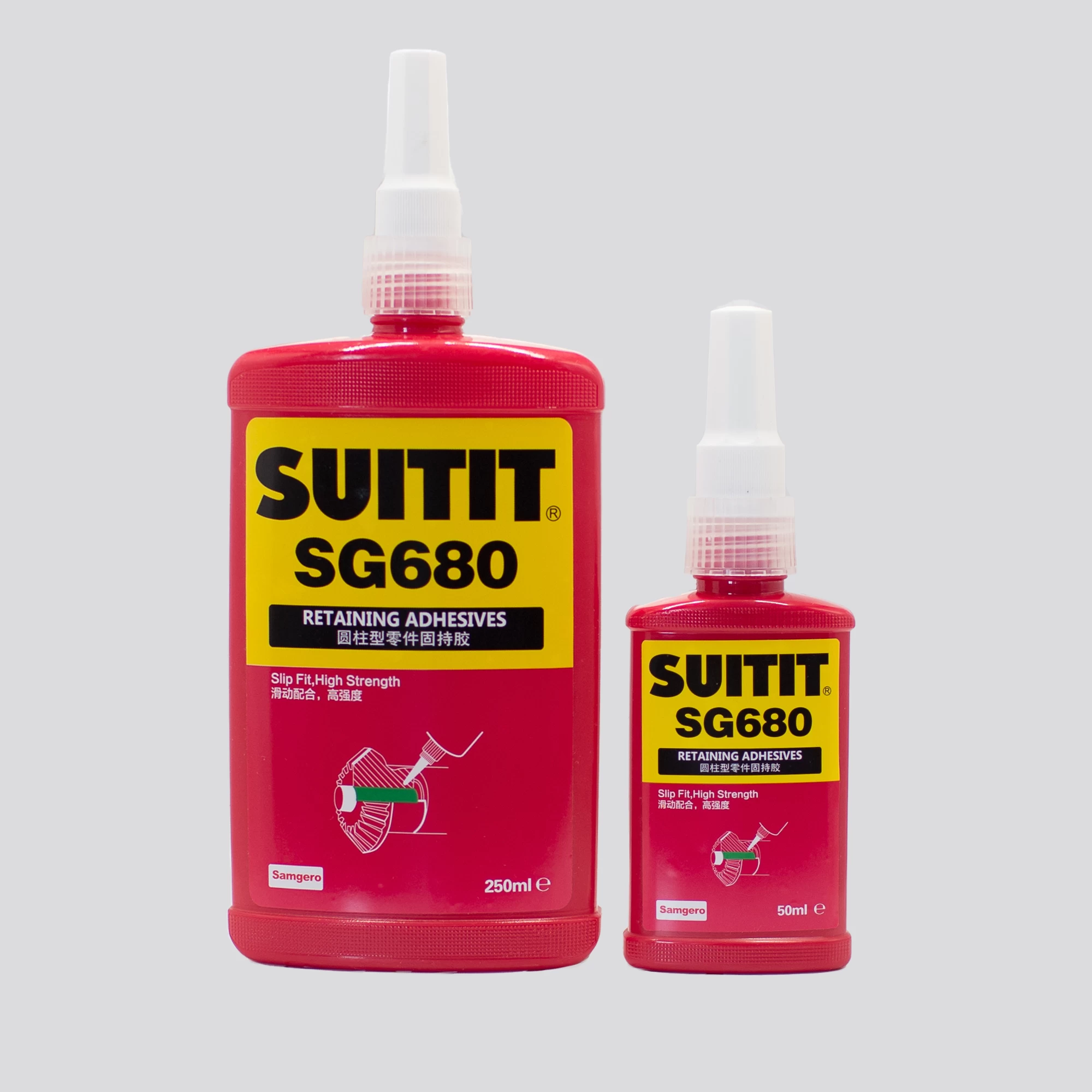
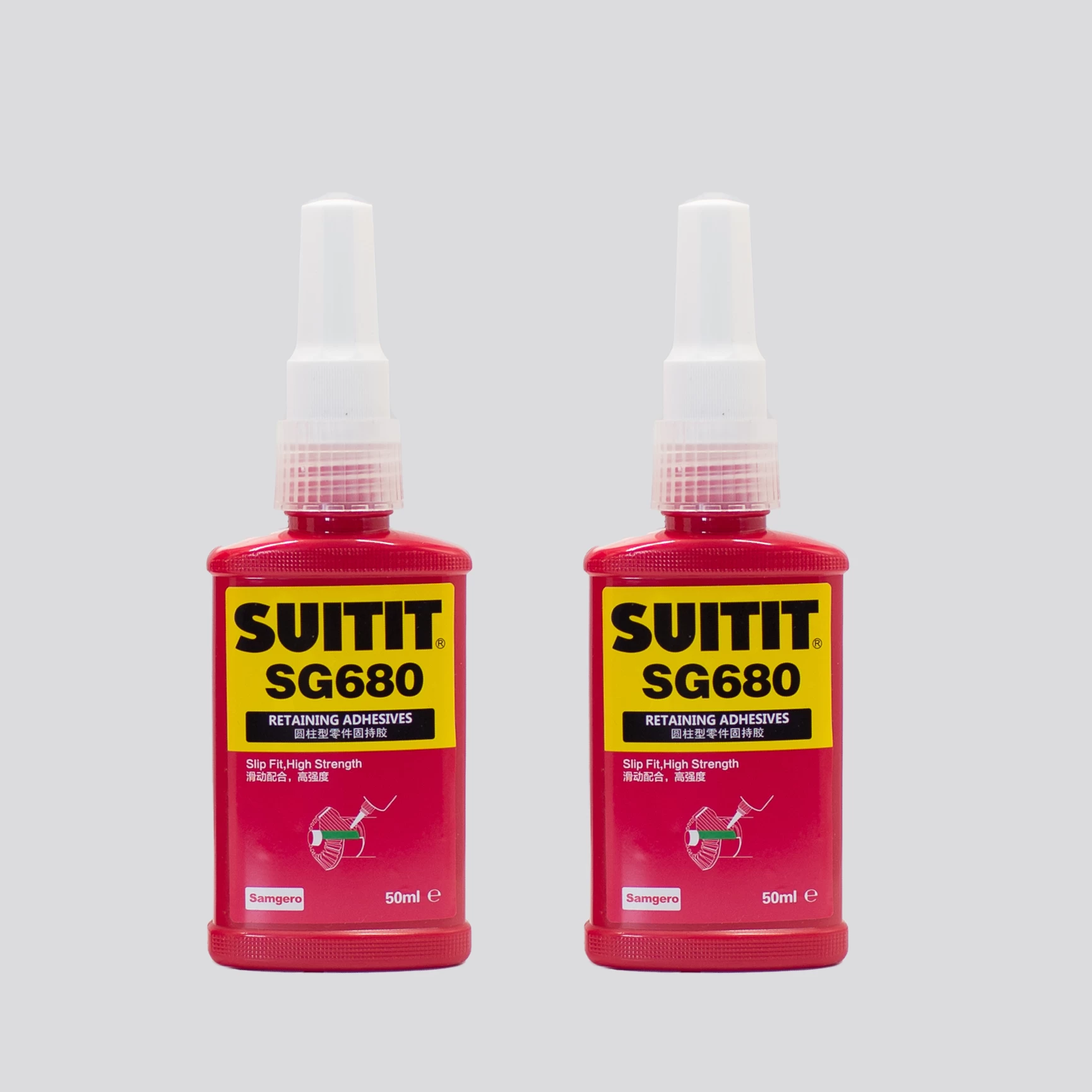
SUITIT SG680 Anaerobic Retaining Adhesives
-
Worldwide dellvery avallable
Product Name:
SUITIT SG680 Anaerobic Retaining Adhesives
Product Description:
SUITIT SG680 Anaerobic Retaining Adhesives is a high-strength medium-viscosity product. Its core advantages lie in its ability to fit large gaps and its load-bearing capacity. It features a green one-component formulation, and it solidifies when exposed to air on a metal surface. It achieves initial solidification in 10 minutes and reaches full strength in 24 hours.
Temperature range: -52°C to 150°C. Shear strength between steel and steel ≥ 24N/mm². It is resistant to vibration and impact, and can tolerate minor oil contamination. It is compatible with steel, stainless steel, and aluminum substrates, and can be used on active and inert metal surfaces.
The operation is convenient as no mixing is required. It is widely used in the assembly of gears, bearings, and shaft sleeves, as well as the repair of out-of-tolerance parts. It is suitable for automotive, motor, and industrial machinery applications and is a reliable holding solution for transmitting high dynamic loads.
Product Details:
· Product Name:SUITIT SG680 Anaerobic Retaining Adhesives
· Chemical Type:Urethane acrylate
· Typical use: High strength, suitable for sliding-fit components
· Color:Green liquid
· Shear Strength:High intensity
· Viscosity (mPa.s):650-1850
· Tensie shear strength(mPa):≥24
· Average disassembly torque (N · m): 28
· Maximum sealing pressure(MPa):30
· Temperature:-52~150℃
· Fixture fime/full cure fime:5min/24h
· Container:50ml/250ml
· Shelf life:12 months
· Product features:Suitable for the bonding operation of cylindrical components, especially for applications with low viscosity requirements.
· Guide for Use:
Assembly
1. To achieve the best results, thoroughly clean the inner and outer surfaces of the material using a detergent such as Daitai cleaner. Wait until the surface is dry before proceeding to the next step.
2. When the curing speed is very slow or the gap is large, a accelerator can be applied on the surface to accelerate the curing process.
3. For sliding fits, only one coat of glue needs to be applied around the guide angle of the shaft and sleeve, and the assembly should be rotated to ensure proper coating.
4. For press fits, both of the surfaces to be joined should be fully coated with glue, and then assembled under appropriate high pressure.
5. For shrink-fit components, the glue should be applied to the parts to form a smooth and uniform film. For thermal fits, the glue should be applied to the shaft. For cold fits, the glue should be applied to the sleeve. For cold-hot fits, the glue should be applied to the cooled component. Avoid condensation on the cooled component.
6. Do not interfere with the components before they reach the sufficient operational strength. Disassembly
1. Disassemble using standard manual tools.
2. If necessary, heat the assembly parts to 250 °C locally. Perform the disassembly operation while heating.
3. For cases where heating to this temperature is not possible, try to heat the assembly parts as much as possible and use mechanical auxiliary equipment for the disassembly operation. Cleaning
For the hardened glue, it can be soaked in the solvent or mechanically ground using tools such as steel brushes.