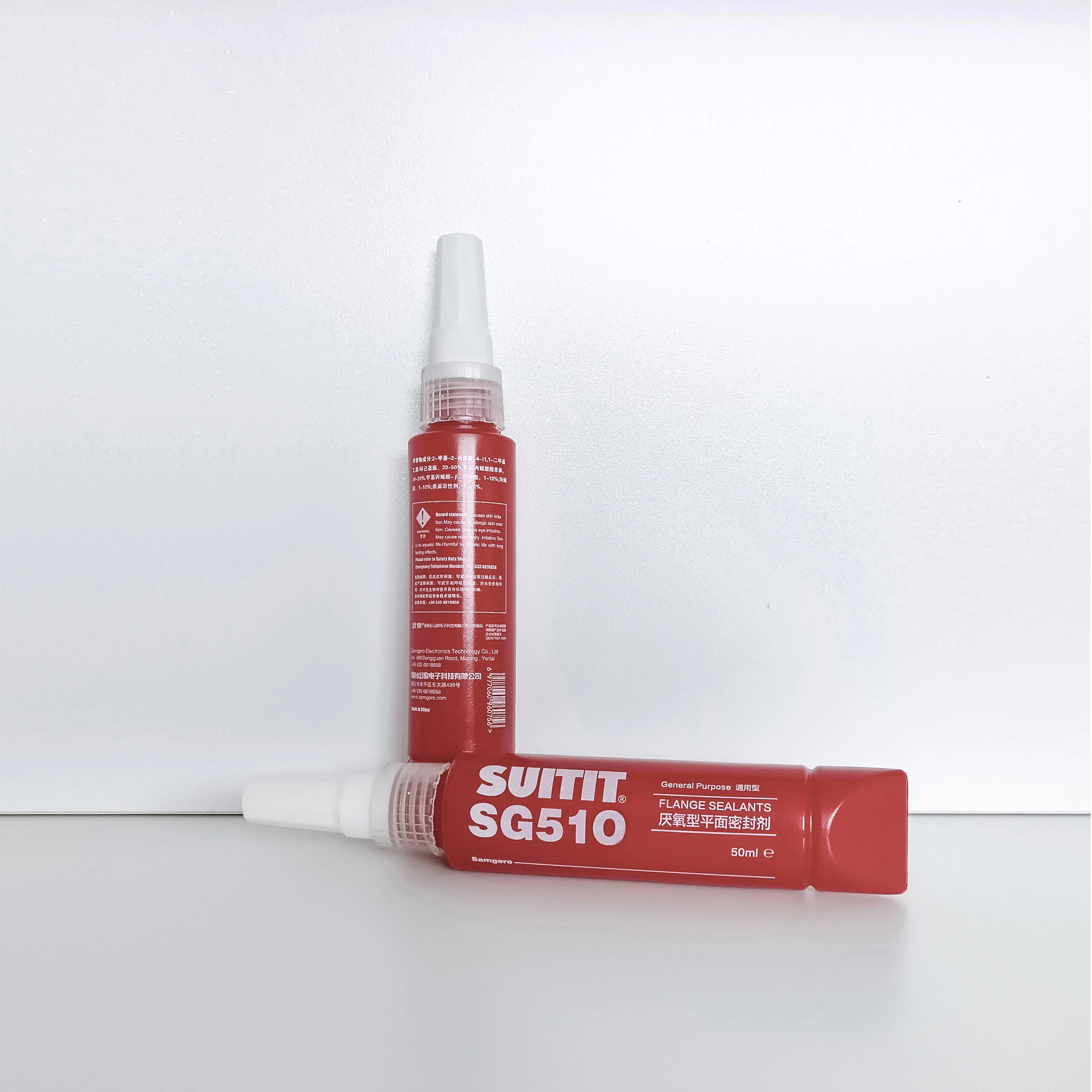
Product Name:
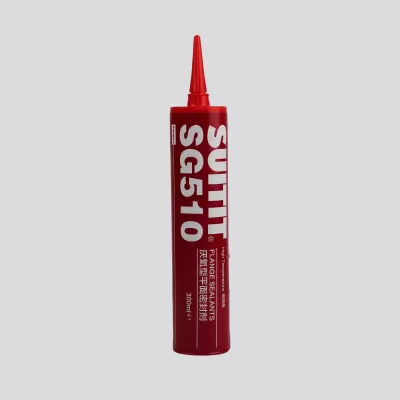
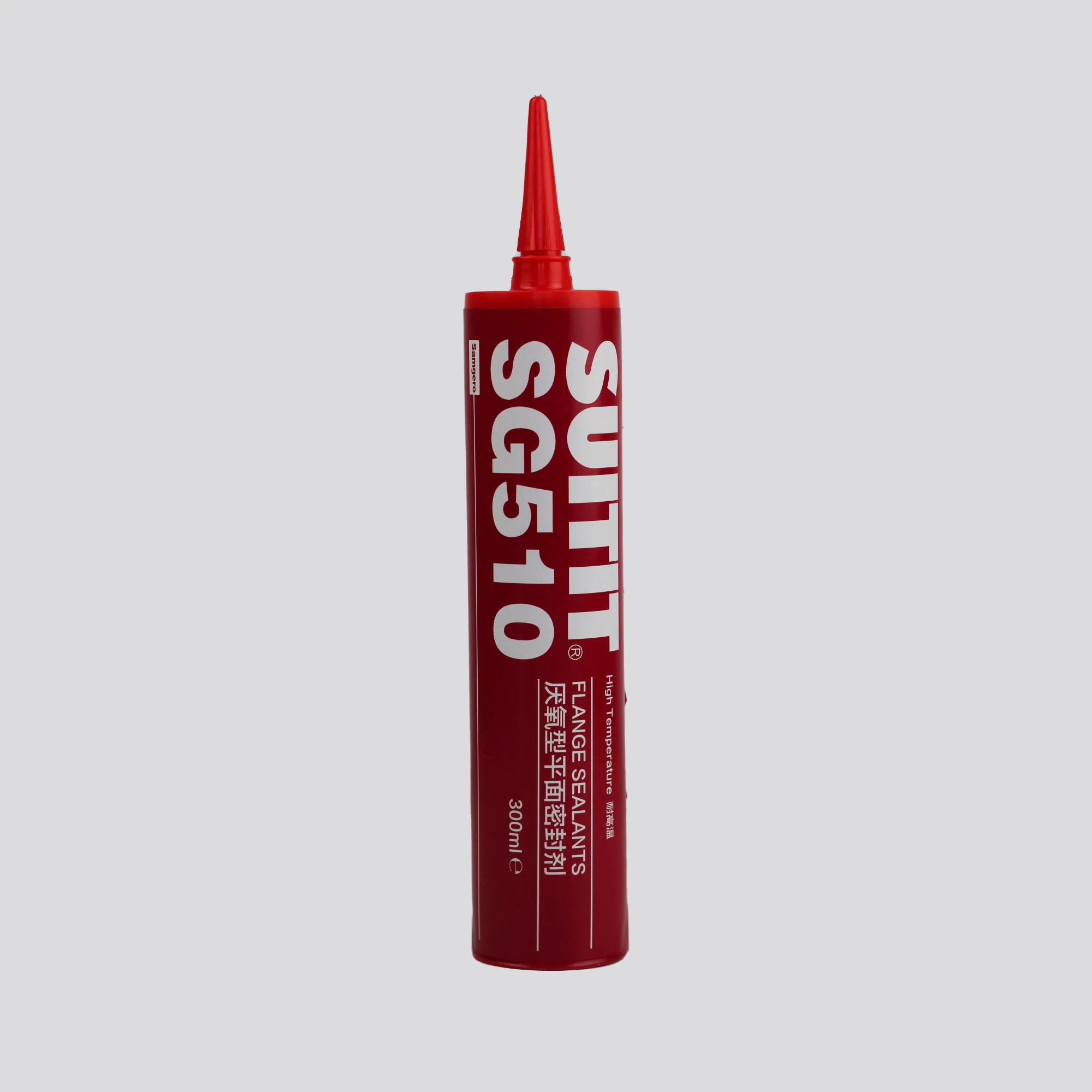
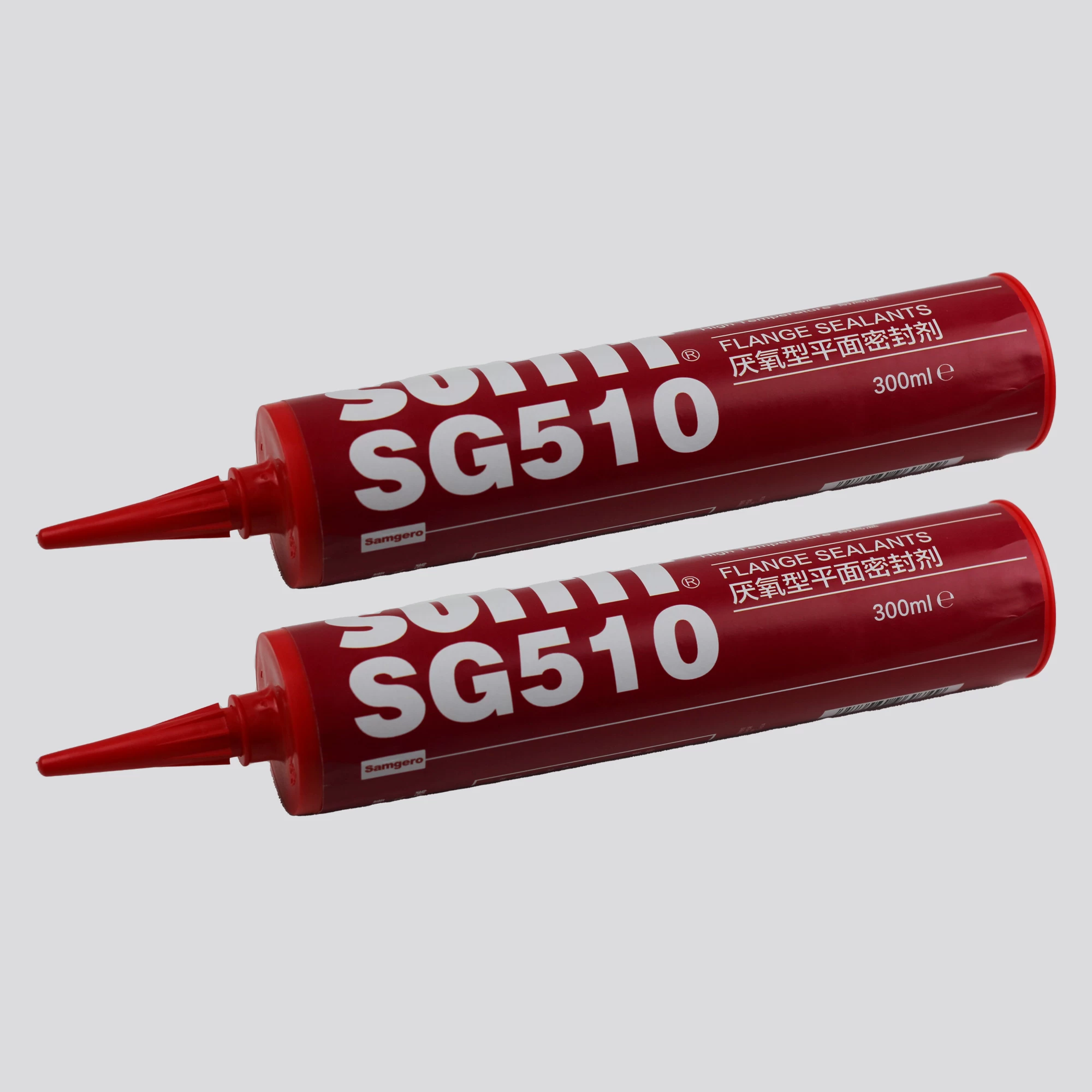
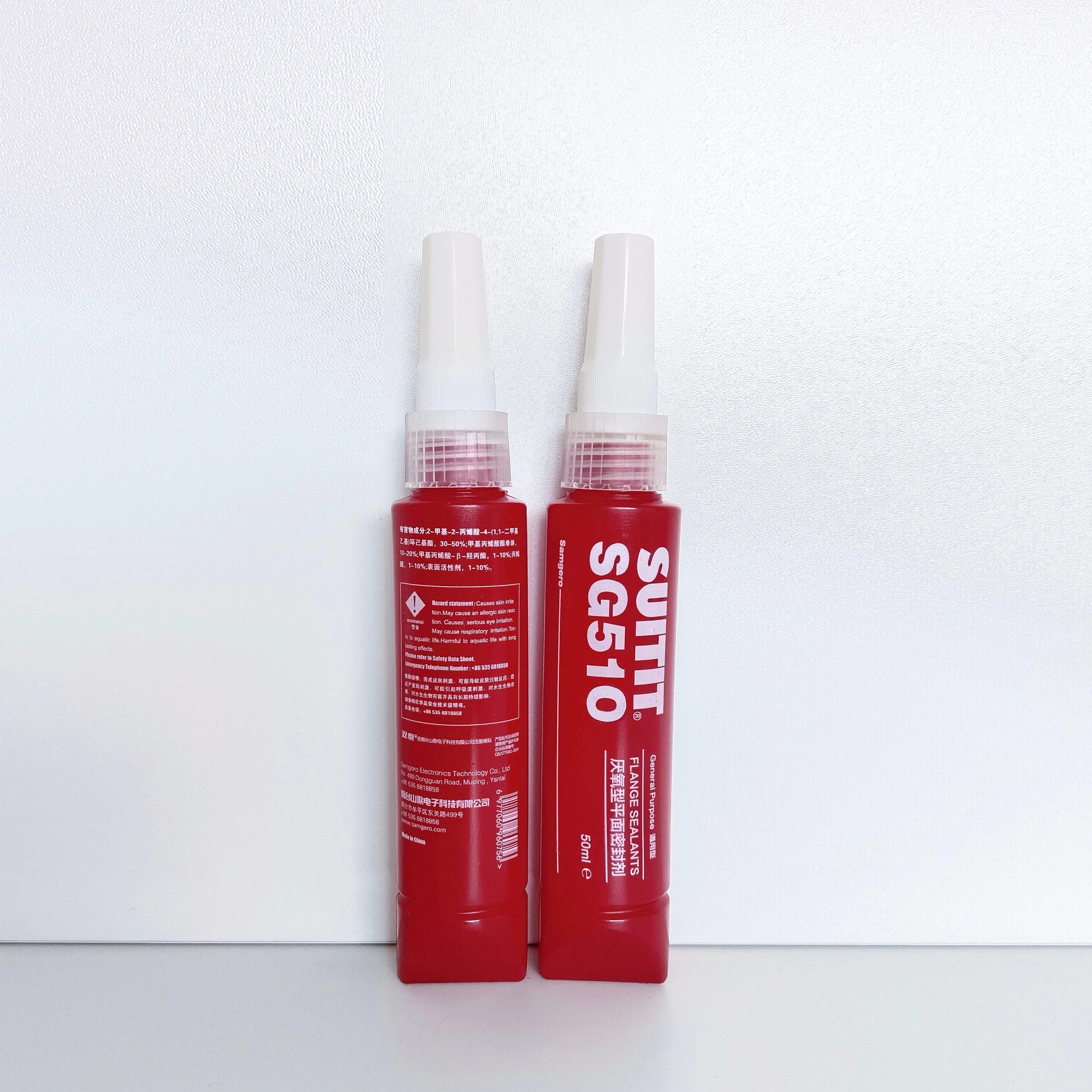
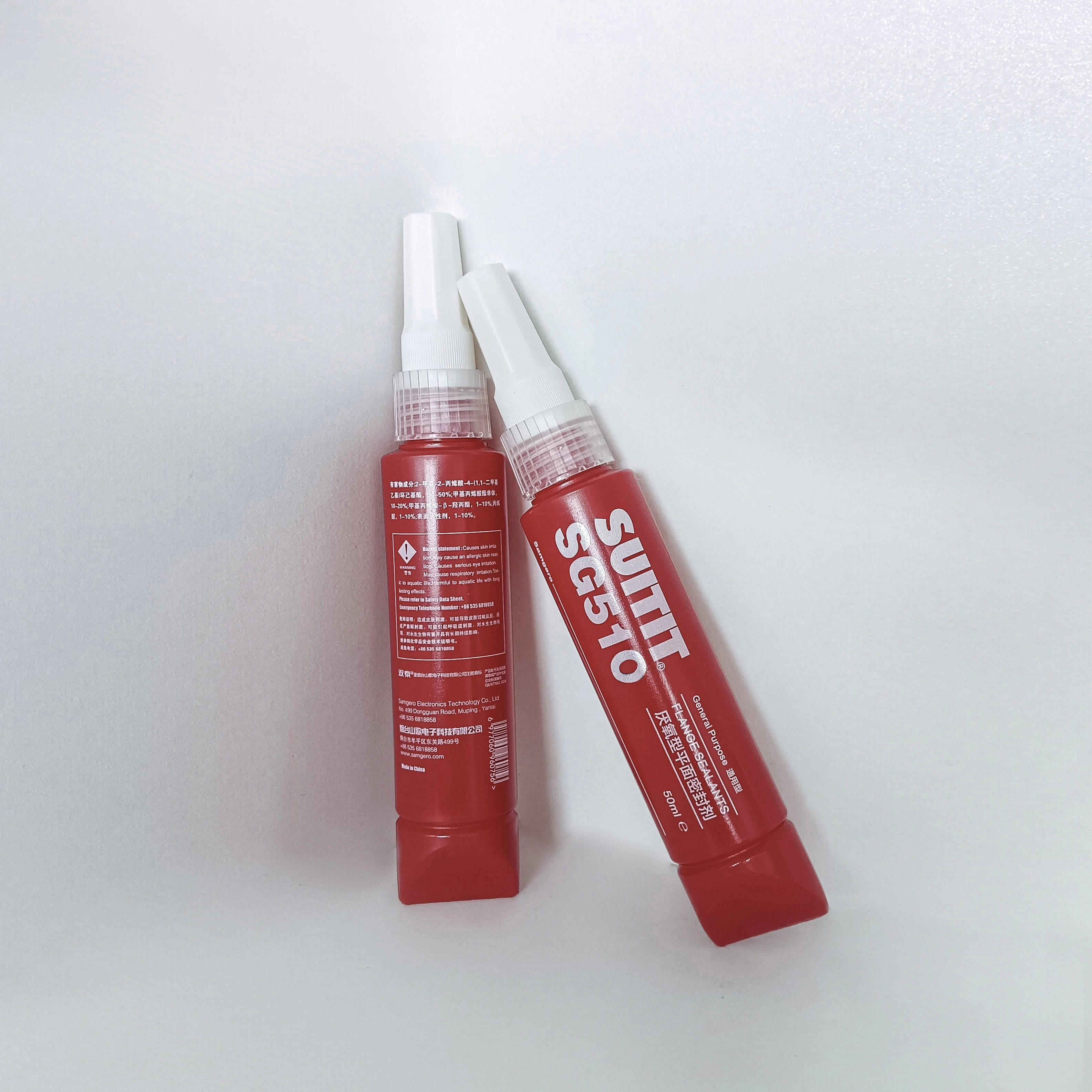
SUITIT SG510 Anaerobic Flange Sealants
Product Description:
SUITIT SG510 Anaerobic Flange Sealants is a specialized product for rigid flanges. Its core advantages are high temperature resistance and strong sealing force. The red paste-like thixotropic formula cures when the metal surfaces are isolated from air. It achieves initial curing in 1-2 hours, reaches full strength in 24 hours, and can fill gaps up to 0.25mm.
Temperature range: -54℃ to 204℃, pressure resistance: 36MPa, oil-resistant and corrosion-resistant. After curing, it forms a rigid gel layer, effectively preventing leakage and rusting. It is compatible with metal substrates such as steel, aluminum, and brass, and can replace traditional gaskets.
The operation is convenient and supports manual or screen printing for applying the sealant. It is widely used for plane sealing in engines, gearboxes, motor housings, etc., and is a reliable solution for industrial assembly and equipment maintenance.
Product Details:
· Product Name:SUITIT SG510 Anaerobic Flange Sealants
· Chemical Type:Methacrylate
· Typical use:high temperature resistance
· Color:Pink opaque paste-like
· Strength:Moderate intensity
· Density (g/cm³):1.1
· Final state after curing: Rigid adhesive layer
· Shear strength (MPa): 5
· Fixture fime/full cure fime:1-2h/24h
· Container:50ml/300ml
· Shelf life:12 months
· Product features:Flange pieces with planar seals for tight fitting in rigid structures
· Guide for Use:
1. To achieve the best results, the surface of the materials to be bonded should be clean and free of grease.
2. This product is suitable for closely mating flange components with an interstice of less than 0.25mm.
3. Apply this product to one surface of the flange disc using manual brushing or screen printing methods.
4. After assembly and before curing, to confirm if it is fully sealed, a certain low pressure (<0.05 MPa) can be applied.
5. After assembly, the flange disc should be tightened as much as possible to avoid sliding. Remove